Smart Cities
IoT sensors and AI analytics for smarter, safer, and more sustainable UK cities
What are Smart Cities?
Smart Cities install IOT and AI sensors, which can share information with the public, businesses, city managers and other sensor systems. Smart Cities connect their sensors and services via the internet of things. The different sensor systems store their information in a common data warehouse and make it available to those who need it.
How it Makes Cities Better Places to Live
To effectively serve people it helps if the city authorities know how many people are going where and when. The flow of pedestrians affects the whole city environment. It is important to know not just the numbers of people but also how the numbers change over time.
An accurate people metering system provides feedback on changes in people’s behaviour within the city and allows the council to effectively manage the flow of people, vehicles and bicycles around the area. This is also known as smart mobility.
Smart Cities and IOT / AI Technologies
Smart City is the holistic view of a city that applies ICT and which strives for getting better life quality and its inhabitants’ accessibility through an economic, social and environmentally sustainable development in the public and private sectors alike.
Smart Cities of the future will be informed, connected and aimed to a more sustainable and resilient path to prosperity. The term “smart” embraces not just the technological, but also the social and human aspects of a city. By adding new sensors and updating existing infrastructure for the digital age, cities will experience significant impacts on the efficiency, capacity and service delivery to citizens, their economic opportunity and overall quality of life.
With the rapid pace of city expansion and increasing demands on infrastructure, the need for investment in smart cities has never been greater. Public budgets, changing demographics and aging city infrastructure add to the complexities of achieving prosperous, sustainable, resilient and inclusive smart cities. This complex environment drives the need for consolidated city performance data including smart data. In this age of digitalisation, smart cities can use data to become more efficient, offer simplified city services and evolve.
Smart cities, enabled by digital connectivity, are about driving efficiencies in services and optimising critical infrastructure through the use of data collection.
Case Study: Manchester

Why Manchester implemented our smart IOT technologies
It is critical that Manchester is able to attract people, businesses and events into the City Centre, including promotional and marketing events such as festivals, arts exhibitions, sports events etc.
We proposed an automated, highly accurate and high performing Video Analytical based IOT sensing technology to facilitate the successful monitoring of events and provide accurate count data (real time and location based data collected for analysis.) to track people, cycles, vehicles, passengers and objects and will provide an insight and in-depth analyses of areas within Manchester City Centre.
The IOT system will provide the capability for the tracking of people, cycles, vehicles, passengers and objects and will provide an insight and in-depth analyses of areas within Manchester City Centre.
Such a critical sensing solution provides an accurate measure of such events and provides areas of Hot Spots / Key Performance Indicators and location-based data around the City Centre of Manchester. Location based data collected will provide a measure of people counting before events, during the events and after the events.
This method of data collection allows you to analyse valuable data; benchmark data measures such as people counting data and has both real time data analyses for real time effective response features along with an historic automatic data collection system for trend analysis.
The attraction of masses of people into the city centre will allow further advertising and marketing strategies to be implemented and can also deliver marketing material / sales advertisements on smartphones of people within the city centre.
This will bring an increase in business sales in the area enhancing a vibrant and cultural environment which would attract investors, visitors and strong talent pool of people within Manchester City Centre.

Improving the Governance and Management of the City Centre through an Internet of Things Sensing location-based data collection and analyses Solution including Real time location based data collection and analysis.
We proposed a complete footfall IOT sensing solution such as IOT Smart Urban Sensing Solution will allow real time and historic/location based data to be collected and analysed for effective city centre management.
The system will allow strong evaluations to be made and allow the leadership / coordination required to drive the delivery of improvements within the city.
The solution would allow the city Centre leader /management to drive change in identified hot spots of heavily populated areas and implement effective management strategies.
This would aid security measures to be implemented to ensure the most heavily populated areas have adequate lighting and security measures. The monitoring of occupancy levels generated through the IOT footfall system is also an added security feature to avoid overcrowding in certain areas.
Ensuring the city centre is accessible and safe on a 24-hour basis is a key strategy which would be addressed by a footfall monitoring system. This would ensure that areas with the city centre would be trend analysed as location-based footfall data is collected over a period of time.

The location-based data and real time data will allow the management and co-ordination of public services in the city centre where any new investments in the city will be validated and subject to improved outcomes.
The resulting new arrangements will involve key stakeholders in the successful management of the city and will also engage all key stakeholders in the successful management of the city.
Data collected through the IOT system will be utilised to provide accurate intelligence and to enable outcomes and targets to be tracked and delivered.

The Smart Urban Sensing – IOT system will also allow the effective management of public and open spaces within Manchester.
This effective management strategy is essential to establish and conclude the city is safe, attractive and accessible. The use of free space is an essential dataset for the allowing of free events within the city. Footfall and location based data collected by the system / analysed including squares, pavements and highways would be allowed to be managed of a high standard with management being allocated.
Areas and streets within Manchester City Centre which displayed footfall at certain times would allow the council to increase the lighting levels with lamp posts for extra visibility and security (City Verve Project) From analyses of the footfall data, areas where there was no footfall identified over a period of time – lighting levels could be decreased saving costs for the city council of Manchester. This is a strong Smart City feature implemented in other cities across the world.
To implement changes in the city centre, we propose to increase the usage of certain events to promote healthy and sporty promotions such as running and jogging, running / cycle events. This in-effect will push people from traditional modes of transport such as cars (petrol and diesel) to walk into the city centre or ride a cycle. This would also increase the use of people using modes of transportation such as buses, trams and trains increasing the number of passengers and reducing the number of private vehicles reducing ‘’pollution levels’’ within the city centre.
To measure the success of such changes highlighted above an accurate people counting, object counting, vehicle counting and cycle counting system along with an Automatic Passenger Counting system for Buses, Trams and Trains will allow the city council of Manchester to monitor such critical data. This will also allow the council to validate passengers and people who use the trams and free buses around the city Centre. This would be a real time and historic data collection IOT system with alerts and alarms including GPS co-ordinates of exactly where people are getting ON and OFF around the city centre. The system proposed will produce data which can be displayed on real time Google maps for effective management planning and effective vehicle traffic management for traffic around the city centre.
For increasing the provision of enforcement staff 24 hours a day 7 days a week an effective footfall monitoring system will allow the council to only designate personnel to specific areas or hot spot areas where required. The proposed sensing technology will provide better analysis and insights across the city centre and can be also used in real time to enable effective responses and trend analyses used to support a democratic decision-making process.
The sensing solution proposed offers a level of portability and can be easily moved to a new position or monitoring location to be re installed due to the embedded features of the high performance IOT – VT hardware modules and allows a flexible level of portability.

We won the Citi Verve tender and installed the following IOT technologies along the Oxford Road Corridor
1. IOT People Counting System
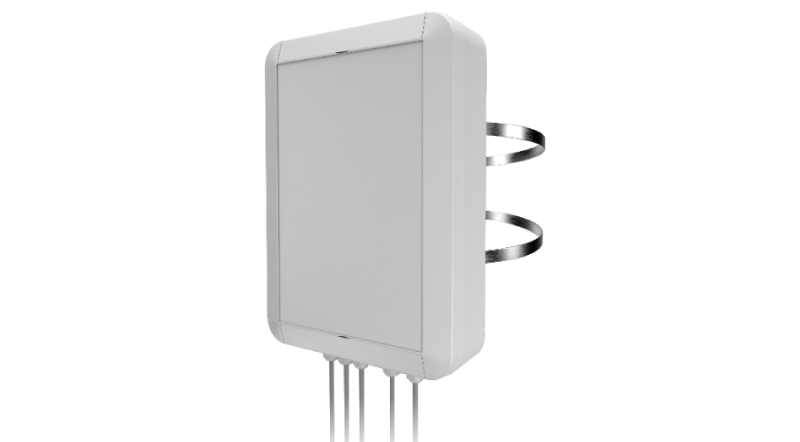
In the High Streets (major routes) and within Manchester City Centre, the Outdoor Smart IOT People Counting System can be installed to monitor and count people along the major high streets and city centre footfall data by day of the week and time of day.
Data logged and provided is both in real time and location based historic data collected for further analyses (Big Data Analytics) for effective city centre management and to help analyse issues raised such as real time data collecting technologies which could be used in real time for effective responses and trend analyses for a democratic decision-making process. The solution can be installed along the major route for the City Verve project leading into the city centre.
The Smart Urban Sensing IOT system can also be installed to provide real time data within retail units in the high street, outside retail units, shopping malls and the city centre which will allow staff scheduling and monitor promotional / marketing events to enhance business. This can demonstrate in a practical way the city’s commitment to retail on the high street. Public Toilet Usage around city centres and major events within the city centre can be monitored through the IOT people counting system and effectively managed for cleaning schedules and managing the flow of people at big events where masses of people are gathered at specific points within the city.
2. IOT Cycle Counting System

The Smart IOT system can be used to count cycles to help monitor and effectively support the promotion of healthy travelling and allows a measure of how green or pollution free certain areas are within a city centre by promoting bicycle health and sports events including and healthier method of travelling.
The Smart IOT system can also be used to help town and city planners determine the most effective and likely most used cycle lanes and cycle paths.
3. AI 3D APC

The AI 3D APC system delivers highly accurate real time Occupancy and GPS data, with fully Integratable capabilities of delivering high quality data into a fleet management transportation system.
The AI 3D APC system delivers real time occupancy data on Transportation Apps such as a BUS ETA Applications, only materials of the highest grade are used to offer a high quality and long-lasting system.
With exceptional multi-functional features such as CCTV and a WiFi hotspot, the AI 3D APC device is a world leader.
4. Smart Air Quality Monitor

The Smart AQ Monitor is an automated small-sensor air quality monitoring system for measuring outdoor and indoor air quality, offering real-time air quality data and analysis. It measures key pollutants in ambient air using the best small sensor technology combined with proprietary data processing derived from extensive global comparisons with reference data.
The small, post-mounted monitoring pod sends raw sensor output to the Smart AQ Monitor server using the mobile phone network and readings can be accessed by a secure login or API connection. It measures NO, NO2, O3, CO, SO2, H2S and TVOC using the latest generation of electrochemical sensors and CO2 monitoring with a NDIR sensor.
The product also measures: particulates PM1, PM2.5, PM10, TPC and TSP (up to 30 microns) with a light-scattering optical particle counter, has a meteorological sensor for wind speed and direction measurement and measures relative humidity, pod temperature, atmospheric pressure as standard.