
Towns & Cities
Artificial Intelligence Sensor Technology
Towns & Cities
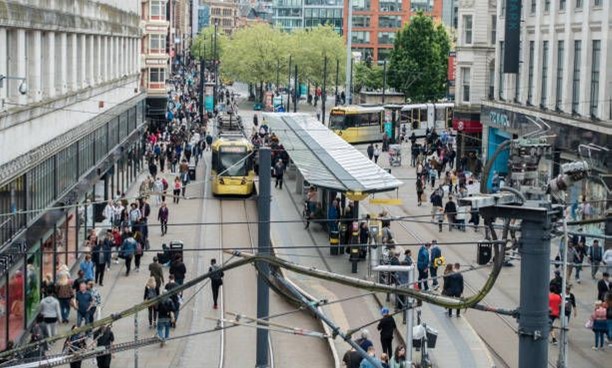
Smart City is the holistic view of a city that applies ICT and which strives for getting better life quality and its inhabitants’ accessibility through an economic, social and environmentally sustainable development in the public and private sectors alike.
Smart cities of the future will be informed, connected and aimed to a more sustainable and resilient path to prosperity. The term “smart” embraces not just the technological, but also the social and human aspects of a city. By adding new sensors and updating existing infrastructure for the digital age, cities will experience significant impacts on the efficiency, capacity and service delivery to citizens, their economic opportunity and overall quality of life.
With the rapid pace of city expansion and increasing demands on infrastructure, the need for investment in smart city solutions has never been greater. Public budgets, changing demographics and aging city infrastructure add to the complexities of achieving prosperous, sustainable, resilient and inclusive cities. This complex environment drives the need for consolidated city performance data including smart data. In this age of digitalisation, cities can use data to become more efficient, offer simplified city services and evolve.
Smart cities, enabled by digital connectivity, are about driving efficiencies in services and optimising critical infrastructure through the use of data collection. Interoperability and analytics help to identify opportunities that will result in better service provision and reduce pressure on city budgets in the following ways:
- Identifying shared benefits between different sectors
- Consolidating infrastructure investments
- Coordinating resources between multiple departments
- Synchronizing IOT systems, actions and operations
- Saving time and resources
Data provides insights into a city but those insights are often missed when data sets are considered independently. By combining active data sets from different sectors new patterns can be identified. By relating health data to housing data, air quality with transport, mobility with employment, the city will begin to illustrate where services may be prioritized.
To gather that data infrastructure has to be digital. Digitally enabled infrastructure can then drive efficiencies in services through optimization of operations and equipment, changing operational patterns based on demand, and managing and maintaining the systems remotely.
Our Products
AI 3D Max
AI 3D APC
AI 3D Mini
AI 3D Pro 2
AI 3D IOT Outdoor
AI IOT Occupancy
Smart AQ Monitor
V8 Analytics Manager
Councils, BIDs and smart-city teams
Check what is practical before you go to tender
We review your count locations, mounting and power options, data needs and governance, and tell you what a robust pedestrian or public-realm monitoring scheme would look like.