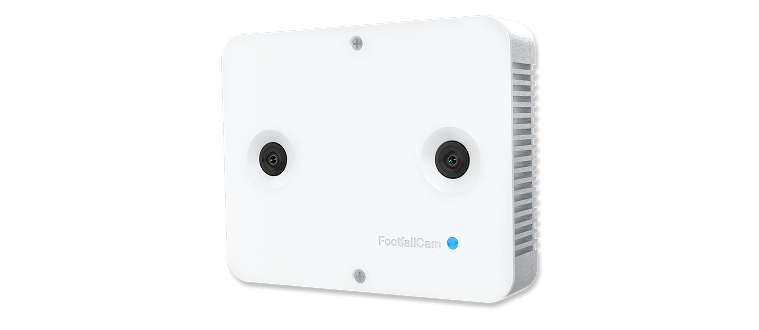
Retail footfall is most valuable when it shows how people use a space, not who they are. People counting without personal data collection helps retailers compare visitor numbers with sales, understand conversion rates and align staff schedules with customer traffic patterns, without making individual identities the focus.
Retailers can measure footfall and handle information responsibly at the same time. The right approach depends on what a system senses, how it processes data and whether its counting method suits the space. This guide explains how retailers use people-count data, how sensing methods differ in their privacy implications, and what to consider when choosing a solution. It also covers how to assess accuracy over time by comparing system counts with manual observations. Use these points to weigh practical insight against privacy and choose an approach that fits your retail environment.
Key Takeaways
- Choose a counting method that suits the layout and traffic you need to measure, as different sensors have different strengths and limitations.
- Understand whether a system avoids capturing identifying information or removes identifying details after capture.
- Use visitor counts alongside sales and traffic patterns to inform decisions about conversion, staffing and opening times.
- Look beyond claims about blurred images: consider what a sensor captures and where processing takes place.
- Assess accuracy by comparing system counts with manual observations over the same period, then repeat checks as conditions change.
Do camera-based people counting technologies offer true privacy?
Privacy-preserving options include infrared beams, overhead counters, thermal sensors, depth-based 3D sensors and camera systems that anonymise data on-device. The key distinction is what each sensor captures before producing a count.
People-counting system types
Beam, overhead, Wi-Fi, Bluetooth and camera-based systems detect visitors in different ways, with implications for count quality and privacy. An infrared beam registers a crossing, but may count two people walking side by side as one. Overhead counters view an entrance from above and need a separate unit at each entrance.
Wi-Fi and Bluetooth systems estimate presence from nearby devices, with accuracy of three to five metres at best. They indicate general movement rather than a precise doorway crossing. For stores measuring entrance traffic, a beam or overhead sensor records passage more directly; the right method depends on the space and purpose.
Image anonymisation and face blurring
Image anonymisation processes camera data to remove identifying details, while face blurring obscures faces in captured images. The distinction matters because blurring may happen only after a recognisable image has already been captured.
Some camera counters capture high-resolution images before software processes them. A counter that blurs faces still captures a recognisable image before applying the blur, so the blur alone does not explain what happens at capture. Modern camera-based systems can anonymise video directly in the device, reducing privacy risk by processing images at the sensor rather than sending identifiable footage elsewhere.
Depth-based counting with 3D sensors
Depth-based 3D sensors measure distance and shape rather than relying on ordinary colour images. Time-of-flight sensors primarily capture depth information, making them a privacy-friendly option for counting people crossing a defined area.
For example, a sensor above a store entrance can use depth changes to distinguish people moving through its counting zone. It can output a count without producing a recognisable image. Thermal sensors work differently: they detect heat signatures, allowing counts without recording ordinary visual detail.
Camera-based video analytics
Camera-based video analytics uses image sequences to identify movement through a space and calculate people counts. Depending on the system, it can also measure foot traffic, dwell times and movement patterns, giving retailers more context than a doorway total alone.
That additional detail makes the processing pathway important. A camera system may analyse footage on-device and output anonymised counts, or capture high-resolution images before processing. Check what data the sensor creates, where anonymisation occurs and whether images are retained. These details help determine whether the system’s analytics suit the intended privacy purpose.
Privacy implications of people-counting methods
Privacy depends on what a people-counting method captures, processes and retains, not simply whether it produces a total. The practical question for retailers is whether they can understand visitor traffic without collecting information about individual people using methods that prioritise people counting without personal data collection.
Privacy risks and personal data
Privacy risk increases when a sensor captures details that could identify or follow a visitor, rather than recording only a count. A system using device signals, for example, may observe patterns associated with a device, while an overhead counter can focus on entrance crossings. This distinction affects whether the data serves a footfall purpose or could reveal more about individual movement.
Most retail questions concern patterns, such as busy periods or movement between areas, rather than identities. A store measuring daily entrance traffic generally needs totals, not a record of each visitor’s journey. Keeping data collection aligned with that purpose avoids gathering details that add no value to the count. Privacy therefore depends on the sensor, the data it produces and how that information is handled.
Privacy-conscious software selection
Privacy-conscious people-counting software should support anonymisation and provide information for a defined business purpose. A retailer comparing visitor counts with sales, for example, needs reliable totals by store and time period, not identifiable footage. Match software outputs to the task to limit unnecessary detail and keep reporting focused.
Assess the full data path: what the sensor captures, what the software processes and what reaches the reporting platform. A dashboard showing aggregate traffic can support staffing or marketing analysis without displaying individual visitors. Consider whether the system retains images or device-related information, and whether it can report counts instead. This helps assess privacy as part of the solution, rather than relying on a general claim about anonymity.
Edge processing and video privacy
Edge processing analyses sensor information on a device inside the building, so counts can be sent off-site without storing video. In a shop monitoring an entrance, the system can process movement locally and transmit the resulting count for reporting. In this case, a numerical total leaves the premises instead of video footage.
Processing location alone does not explain every privacy detail. Establish whether video is captured, whether it is stored and what data the device sends onwards. A system that processes images locally but retains footage has a different data pathway from one that sends only counts. A clear account of these steps helps retailers assess privacy alongside operational needs.
For a retail or venue project, discuss privacy-conscious people counting with Smart Urban Sensing Ltd or email sales@smarturbansensing.co.uk to explore the data flow that suits your site.
What is the difference between anonymous and anonymised data?
People can be counted without collecting personal data by using sensors that register crossings, depth or heat, rather than identities. The key distinction is whether a method avoids personal data from the outset or collects it before removing identifying details.
Anonymous sensors and personal data
An anonymous sensor measures presence or movement without capturing information that identifies a visitor. An infrared beam, for example, can register someone crossing an entrance, while a depth sensor can record changes in position. The result is a count, not a profile.
This matters because the sensor’s original capture determines what information enters the system. Unlike a camera that records images before processing, a sensor designed to produce counts directly can avoid creating identifiable visual sources. Retailers can use entrance totals to understand traffic without needing to know who entered or when they returned.
Anonymised statistics from counting data
Anonymised statistics are produced by processing data to remove or obscure identifying details, rather than avoiding their collection altogether. The Office for National Statistics uses 2021 Census personal data only to produce anonymised statistics. This illustrates the difference between starting with personal data and publishing aggregated results.
A retail system might process movement data and report total visitors by time period. That summary can support staffing analysis without showing individual journeys. The distinction depends on the source data and its processing: an aggregate output alone does not show whether personal information was collected earlier or how it was handled.
Intrinsic anonymity in count data
Intrinsic anonymity means the measurement is non-identifying by design because the sensor does not capture personal details in the first place. A doorway counter that records each crossing as a number can produce an entrance total without images, names or device identifiers.
This differs from anonymisation after capture. With intrinsic anonymity, there is no identifying record to remove from the measurement. A store that needs hourly visitor totals, for example, can receive counts by time period rather than footage or individual movement histories. This better aligns the measurement with the business question.
UK GDPR and anonymous count data
For a UK GDPR assessment, the key distinction is whether a counting method collects personal data or produces information that cannot identify an individual. A total with no personal details differs from identifiable source data processed into a summary. The data pathway matters, not just the final report.
Consider a camera system that processes images before reporting an anonymous count. The output may be aggregated, but the process begins with image capture. A sensor that directly measures crossings may avoid creating that source material. Documenting what the device captures, what processing occurs and what information is retained helps clarify the privacy characteristics of each method.

What should I consider when choosing a people counting solution?
Start with the decision the count needs to support, then match the sensor and reporting to that purpose. A shop measuring conversion needs different insights from a venue monitoring crowd movement. For retailers, people counting without personal data collection can provide useful footfall insight while keeping measurement focused on operational needs.
People counting across venues and workplaces
People counting measures visitor numbers or movement through a defined space, helping teams plan operations around actual traffic. In retail, comparing store visits with sales shows conversion; comparing passing street traffic with entries can indicate whether window displays attract visitors.
Hospitality venues can use counts to understand busy periods, while event teams can monitor entry points and redirect traffic if overcrowding develops. In workplaces, occupancy data can reveal how rooms are used. A meeting room designed for 12 people, for example, may regularly host groups of only 2 or 3.
In transport and property settings, first define the area and movement to measure. A transport hub may need passenger totals at an entrance, while a property manager may need occupancy patterns across shared spaces. Smart city monitoring can measure movement on cycle lanes or at junctions. Each use case needs a counting zone and output suited to the decision.
Retail GDPR considerations
For retail people counting, choose a system that matches data collection to the operational purpose and favours privacy-first, anonymised data. A store planning staff schedules does not need identifiable visitor histories to align shifts with footfall patterns. People counting without personal data collection keeps measurement focused on this practical need.
Consider what the sensor captures, how software processes it and what information appears in reports. Conversion analysis needs visitor totals and sales data, for example, while staff planning needs traffic patterns by time. Keep monitoring focused on those outputs to make the data flow easier to assess against privacy expectations in a retail setting.
Real-time counts can support decisions during trading, rather than only inform later reports. If an entrance becomes crowded, venue staff can use live occupancy information to redirect visitors. Retail managers can adjust staff coverage as traffic rises or falls, helping avoid understaffing during busy periods and overstaffing during quieter ones. To further support frontline teams during peak footfall, retail and hospitality venues can also explore automation through gorobotics.co.uk, which supplies intelligent service robots designed to assist operations on the floor.
Choose reporting that connects to a clear measure of success. A shopping centre assessing a display can compare passing traffic with store entries; a retailer can compare footfall with transactions. Define locations and time periods consistently to produce a useful comparison, rather than an isolated count that cannot guide a decision.
Accuracy validation and ongoing checks
Accuracy is not just a specification; it is whether the count reflects what happens in the space. Validate a people counter by comparing its readings with a manual count over the same period.
For a useful comparison, keep the counting zone, direction and time window consistent. If the sensor counts entries at a shop entrance, the manual observer should count entries at that entrance, not everyone passing the shopfront. Record both results together, then note differences and conditions that might explain them, such as groups entering side by side or a temporary obstruction.
Test under more than one operating condition. A quiet period can reveal missed individual crossings, while a busy interval shows whether close movement affects detection. If a venue has separate entrances, validate each one because placement and foot traffic may differ. Record the date, location, manual total and system total so that later comparisons are meaningful.
Accuracy can shift when the physical environment changes. A shop refit, relocated sensor, new entrance furniture or changed counting zone can affect what the device detects. Repeat a manual comparison after such changes, and investigate any sudden difference before using the figures for staffing or trading decisions. Check that the system still measures the intended direction and area.
Interpret results in light of their intended use. Retailers may compare visitor counts with sales transactions to calculate conversion, so missed or duplicated entries can distort the measure. A store using counts to plan staff shifts needs dependable traffic patterns across opening hours. For venue occupancy monitoring, an inaccurate total can also make it harder to assess crowding at an entrance.
Ongoing checks should look at patterns, not just one matching total. Compare counts across equivalent periods and investigate repeated differences between manual observations and system readings. Review the sensor’s position, counting line and any changes to the space before altering the data. Do not adjust figures simply to force agreement: a consistent shortfall calls for investigation of its cause and the processing method.
Document each validation and the action taken, such as correcting sensor alignment or reviewing the count zone. This creates a clear record for future decisions and helps distinguish a genuine change in footfall from a measurement issue. To discuss a validation approach for your site, Book a free 20-minute footfall review or email sales@smarturbansensing.co.uk.
Smart Urban Sensing: Real time Data
Smart Urban Sensing helps retailers turn people counts into information they can use for operational decisions. Where the priority is measuring store footfall while keeping the focus on counts rather than individual identities, its people-counting systems use 3D stereoscopic, thermal and infrared sensors with a privacy-first approach.
For retail settings, AI 3DPro2, AI 3DPro1 and Retail Starter Kits provide options to consider alongside the site layout and counting purpose. Real time Data can support teams that need current footfall information to understand changing visitor patterns. The right configuration depends on what the store needs to measure and how it will use the results.
To discuss a people-counting approach for your retail environment, Book a free 20-minute footfall review or email sales@smarturbansensing.co.uk.
Make your next counting decision with confidence
Turn your privacy and measurement priorities into a clear brief for your project. Identify the decision the data should support, the areas to measure and the level of detail that is useful. This gives your team a practical basis for discussing people counting without personal data collection in your retail environment.
Smart Urban Sensing offers AI 3DPro2, AI 3DPro1 and Retail Starter Kits for retail people-counting needs. The right starting point depends on your site and the operational question you want the data to answer. A focused conversation can help bring those requirements together without losing sight of privacy or the value of the resulting insight.
Contact Smart Urban Sensing to discuss your requirements, or email sales@smarturbansensing.co.uk. A considered next step can help you build a clearer view of visitor activity while keeping your priorities at the centre.
Frequently Asked Questions
How is people count data used in retail?
Retailers use people counts to connect visitor activity with commercial and operational decisions. A manager can compare visits and transactions across trading periods to see when conversion changes, then consider staffing or promotions. Shopping centres can also compare entrances with individual store visits to understand how visitors move through a site. Counts provide context, but do not explain on their own why a customer bought or left.
How much does people counting cost?
The cost depends on the number of areas or entrances to measure, the sensor type, installation requirements and any analytics needed. A single entrance has different requirements from a multi-site retail operation or a venue measuring several zones. Software and connectivity can also affect the project scope, where commercial technology providers such as Terapixels Systems can assist with structured cabling and secure network monitoring to support connected sensors. The price depends on the case and is provided after a quote request, based on the equipment, installation and reporting requirements.
Are People Counting devices GDPR compliant?
Not automatically: compliance depends on the data a device captures and how the system is configured and used. A sensor producing anonymous counts has a different privacy profile from one capturing identifiable images or device information. Smart Urban Sensing’s technology is privacy-first and GDPR-compliant, using depth data only, with zero images stored or transmitted. Consider the complete data flow, including processing and reporting, rather than relying on a product label alone.
What makes an accurate people counter?
Accuracy depends on whether the sensor suits the entrance geometry, mounting position and movement patterns. A narrow doorway with one clear direction of travel presents a different measurement challenge from a wide entrance with people crossing in both directions. The counting zone must match the area being measured, and installation conditions matter. AI 3DPro2 is specified for up to 99% accuracy under validated installation conditions, not as a universal result for every site.
Can small businesses or single venues benefit from people counting?
Yes. A single shop can use visitor totals to understand quieter trading periods, plan staff coverage or compare footfall with sales. A venue can use counts to understand how attendance changes around particular activities or opening periods. The value comes from connecting a count to a decision the team can act on. Retail Starter Kits are an option for retail projects. Contact Smart Urban Sensing or email sales@smarturbansensing.co.uk to discuss your site.
What is anonymous people counting?
Anonymous people counting produces totals without capturing information that identifies individual visitors. A sensor can record people crossing a defined entrance, then report a count for the site or period. The result can support operational planning without identifying who entered. The important distinction is whether the sensor avoids collecting identifying information from the outset, rather than collecting it and obscuring details later.
What is the difference between people counting and footfall analytics?
People counting records how many people pass through a defined area; footfall analytics uses those counts to reveal patterns that support decisions. A retailer might review how visits vary between entrances or trading periods, then compare visits with sales information. Smart Urban Sensing’s V9 Analytics Software supports data-driven insights from people-counting systems. Analytics makes counts more useful by placing them in context, but the quality of its conclusions still depends on relevant, consistent measurements.
How accurate are thermal, infrared, radar and computer-vision people counters?
There is no single accuracy figure that applies across thermal, infrared, radar and computer-vision counters. Results depend on sensor design, placement, entrance layout, overlapping movement and the conditions during measurement. A comparison should use a manual count and system readings from the same location and period. For a specific product, check its stated accuracy and validation conditions: AI 3DPro2 is specified for up to 99% accuracy under validated installation conditions.
Retail and shopping centres
Find out what your entrance data should be telling you
In 20 minutes we review your entrances, current counting setup and conversion questions, then tell you what accurate footfall data would change. No obligation, no hard sell.