
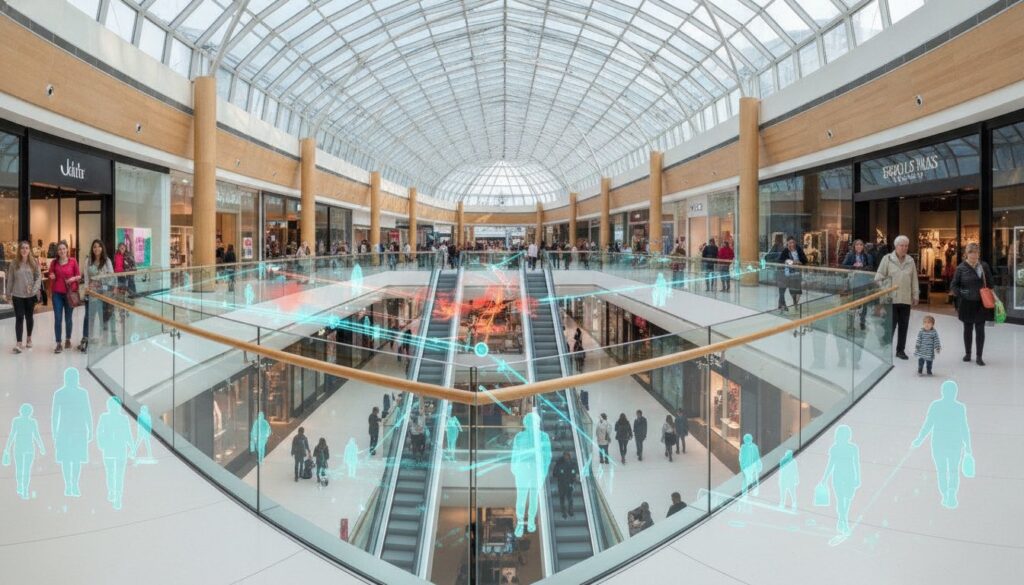
What if your tenant negotiations weren’t based on “best guesses” from legacy infrared beams, but on 99% accurate, real-time data? It’s a common struggle for centre managers who find themselves unable to justify rental rates because their current shopping centre analytics software lacks the necessary precision. You’re likely already aware that relying on outdated hardware doesn’t just hinder growth; it leaves you vulnerable to privacy concerns in an era where GDPR compliance and the “right to erasure” are top enforcement priorities.
In this guide, we’ll demonstrate how to select and deploy a high-precision analytics ecosystem that transforms raw visitor counts into actionable intelligence. You’ll discover how to leverage AI 3DPro2 sensors to achieve gold-standard accuracy whilst maintaining a privacy-first approach that avoids the pitfalls of facial recognition. We’ll also preview how V9 Analytics Software serves as a central hub for automated reporting, allowing you to optimise staffing and energy usage with confidence. To discuss your specific requirements, please contact us at sales@smarturbansensing.co.uk or visit our contact us page on smarturbansensing.co.uk.
Key Takeaways
- Learn how to achieve 99% accuracy by replacing legacy infrared beams with AI 3DPro2 stereoscopic sensors.
- Discover how to integrate high-precision shopping centre analytics software, such as V9 Analytics, to aggregate data from multiple IoT sources into one central hub.
- Master the implementation of a GDPR-compliant framework that protects visitor privacy whilst providing deep insights into customer behaviour.
- Understand the methodology for correlating footfall peaks with marketing activities to accurately measure ROI and justify rental rates to tenants.
- For expert guidance on your analytics strategy, contact sales@smarturbansensing.co.uk or visit our contact us page on smarturbansensing.co.uk.
Understanding the Role of Shopping Centre Analytics Software
Modern shopping centre analytics software, such as the V9 Analytics platform, serves as the central intelligence hub of a retail environment. It acts as a hardware-agnostic operating layer that aggregates data from a network of IoT sensors to provide a granular view of visitor behaviour. In 2026, the industry has moved beyond the rudimentary “in-and-out” counts provided by legacy infrared beams or manual clickers. These older methods often suffer from high error margins and lack the depth required for strategic planning. Today’s standards demand 99% accuracy, shifting the focus from simple volume to complex behavioural analytics. This includes tracking dwell times, identifying flow paths, and establishing store traffic analysis as a foundational management tool for every unit within the scheme.
Why Real-Time Data is Essential for Modern Asset Management
Asset managers can’t afford to wait for weekly reports to make operational decisions. Real-time occupancy monitoring is now a critical requirement for fire safety and strict regulatory compliance. It allows onsite teams to manage crowd density dynamically, responding instantly to sudden surges in footfall during peak holiday periods or promotional events. Advanced 3D sensors can even distinguish between adults, children, and shopping trolleys, providing a level of detail that was previously impossible. Beyond safety, this high-velocity data serves a vital commercial purpose. It provides the empirical evidence needed to justify service charges and rental values to savvy tenants. When you can prove exactly how many shoppers passed a specific storefront at 2:00 PM on a Saturday, the conversation shifts from speculation to a transparent, data-driven partnership.
The Move Towards Non-Intrusive Sensing
Ethical data collection is the new industry benchmark. There’s a stark distinction between intrusive methods like facial recognition and the non-intrusive 3D stereoscopic data collection favoured by market leaders. British shoppers value their privacy; there’s a growing resistance amongst the public regarding biometric tracking. Modern software solutions thrive by adopting a “Privacy by Design” framework. By using advanced sensors such as the AI 3DPro2, centres capture precise movement and behaviour patterns without ever recording personal identifiers. This approach ensures total GDPR compliance whilst maintaining the high-fidelity data required for operational growth. To discuss implementing a privacy-first solution for your facility, email sales@smarturbansensing.co.uk or visit our contact us page on smarturbansensing.co.uk.
The Technology Foundation: 3D Sensors and AI Integration
The efficacy of any shopping centre analytics software depends entirely on the fidelity of the data it ingests. If the underlying sensors provide flawed information, the resulting dashboard visualisations will lead to misguided management decisions. This is why the AI 3DPro2 has become the industry benchmark. Using AI-powered stereoscopic vision, these sensors provide the high-precision “raw material” that modern software platforms require. Unlike older technologies, these devices perceive depth, allowing them to distinguish between adults, children, and even inanimate objects like shopping trolleys or pushchairs with 99% accuracy.
When accuracy drops even by a few percentage points, the cumulative error over a month can misrepresent thousands of visitors. High-precision hardware prevents these “garbage in, garbage out” scenarios, ensuring that every chart and graph in your software dashboard is a foundation for confident investment. AI integration plays a pivotal role in refining this data before it ever reaches the manager’s screen. Sophisticated algorithms can filter out “non-prospects,” such as security guards on patrol or cleaning staff, ensuring that footfall metrics represent genuine potential customers. By eliminating these outliers at the source, the software provides a true reflection of retail opportunity.
Stereoscopic vs Thermal: Choosing the Right Data Input
While thermal imaging was once common, it often struggles in high-ceiling atriums or complex entrances where ambient temperature fluctuations occur. 3D stereoscopic sensors are superior in these environments because they rely on visual depth rather than heat signatures. This ensures consistent performance even in drafty entrance halls or under intense sunlight. For low-light areas, these sensors utilise infrared technology to maintain their 99% accuracy without compromising data integrity. If you’re unsure which sensor configuration suits your layout, you can speak with our technical team for a detailed site assessment.
Edge Computing: Processing Data at the Source
Modern analytics ecosystems rely on edge computing, where data is processed directly on the sensor rather than being sent to the cloud in its raw form. This is vital for privacy; physical movements are converted into anonymous coordinates instantly, ensuring no personal imagery leaves the device. This decentralised approach also reduces bandwidth requirements across large shopping centre networks and enables real-time AI processing. Managers receive immediate occupancy alerts, allowing for proactive crowd control and enhanced safety. To explore how these technologies can be tailored to your specific infrastructure, contact us at sales@smarturbansensing.co.uk or visit our contact us page on smarturbansensing.co.uk.
Essential Features for Modern Retail Analytics Software
To maximise the value of your investment, shopping centre analytics software must offer more than just a scrolling list of numbers. A robust platform provides a comprehensive suite of modules designed to solve specific operational challenges. Central to this is a GDPR-compliant data pipeline. By anonymising visitor information at the source, the software ensures that your facility meets the highest ethical standards whilst delivering deep insights. Cloud-based accessibility is equally vital; it allows asset management teams to monitor performance from any location, ensuring that stakeholders remain informed whether they’re on-site or at a regional headquarters.
For those managing multiple sites, the ability to view “Normalised Data” is indispensable. This feature allows you to compare different centres across a national portfolio on a like-for-like basis, accounting for variables such as square footage or local demographics. It transforms individual site metrics into a cohesive strategic narrative, helping you identify which locations are over-performing and which require tactical intervention. This level of oversight is what separates modern data-driven management from traditional, siloed approaches.
Heatmapping and Flow Analysis Modules
Visualising the customer journey is essential for high-performance mall management. Heatmapping modules identify “hotspots” where shoppers congregate and “cold zones” that may require better signage or a revised tenant mix. Flow analysis goes a step further by tracking the specific paths visitors take through the mall. This data is critical when optimising the placement of lucrative kiosks or digital advertising screens. By integrating these insights with retail customer behaviour analysis, managers gain a granular understanding of how mall-wide traffic translates into individual store entries.
Automated Reporting and Stakeholder Dashboards
Manual data entry is a significant drain on resources. Modern software automates this process, generating daily footfall reports, year-on-year comparisons, and even weather-impact analysis without human intervention. These reports can be scheduled to arrive in stakeholder inboxes precisely when needed, saving hours of administrative work every week. Customisation is key; a Marketing Manager might focus on campaign-driven peaks, whilst an Operations Manager requires data on peak occupancy for cleaning and security schedules. Tailored dashboards ensure that every user sees the metrics most relevant to their specific role. If you’re ready to upgrade your reporting capabilities, our team is available to assist at sales@smarturbansensing.co.uk. You can also learn more by visiting our contact us page on smarturbansensing.co.uk.

How to Transform Raw Footfall Data into Actionable Insights
Raw numbers are just the beginning. The real power of shopping centre analytics software lies in its ability to correlate disparate data sets to reveal the “why” behind visitor behaviour. For instance, by overlaying marketing event calendars with footfall peaks, managers can determine the exact ROI of promotional spend. If a high-cost seasonal launch fails to generate a measurable spike in visitor volume compared to the previous year, the data provides the objective evidence needed to pivot future strategies. It moves the conversation from subjective opinion to empirical fact.
Identifying “dead zones” is another critical application for asset management. By analysing flow paths through the software, you can pinpoint areas of the mall that consistently underperform. This insight allows for proactive leasing adjustments, such as repositioning anchor tenants or introducing pop-up kiosks to draw traffic into quieter corridors. It’s about using the platform to re-engineer the physical space based on how people actually move. This data-driven approach ensures that every square metre of the scheme is working to its full potential.
Optimising Staffing and Security Levels
Predictive analytics within the platform allow you to anticipate busy periods with remarkable precision. Instead of a flat staffing rota, you can align cleaning and security teams with actual visitor density. This approach ensures that your facility remains safe and pristine during peak Saturday rushes whilst avoiding unnecessary overheads on quieter Tuesday mornings. Effectively using footfall data for staff scheduling is one of the fastest ways to improve operational margins and reduce wasted labour costs.
Enhancing Tenant Relations through Data Transparency
Data transparency builds trust with retailers and simplifies complex negotiations. By sharing centre-wide trends and comparing mall footfall with specific store entrances, you can help tenants calculate their own conversion rates. This collaborative approach helps resolve disputes regarding rent components and positions the centre management as a strategic partner in the tenant’s success. You can find more on using footfall data to increase retail conversion in our dedicated trends report. To implement these insights at your location, request a tailored demonstration of our V9 platform or email our team at sales@smarturbansensing.co.uk.
Implementing a Privacy-First Solution with Smart Urban Sensing
V9 Analytics Software represents the pinnacle of retail intelligence in the UK market. It isn’t just a reporting tool; it’s a strategic asset that integrates perfectly with AI 3DPro2 sensors to provide a comprehensive view of your environment. This synergy ensures that the 99% accuracy captured at the entrance is translated into meaningful insights on the manager’s dashboard. Smart Urban Sensing Ltd specialises in large-scale deployments, providing the national support and technical expertise required to modernise complex retail infrastructures across the country.
Our “Privacy First” philosophy is at the core of every installation. We recognise the significant public and regulatory backlash against intrusive technologies like facial recognition. Consequently, our systems are designed to be 100% GDPR compliant from the ground up. No personal data is stored, and no identifiable imagery ever leaves the sensor. By converting physical movement into anonymous coordinates at the edge, we protect visitor privacy whilst delivering the high-fidelity data you need to thrive. This approach mitigates the risk of legal challenges and builds long-term trust with the shopping public.
The V9 Analytics Advantage
The V9 platform features a user-friendly interface tailored for centre managers who need clarity without technical complexity. It provides a secure, cloud-based architecture that guarantees data integrity across your entire estate. Whether you’re managing a single regional retail park or a national portfolio of high-street centres, the software scales effortlessly. It aggregates data from multiple sources into a single, intuitive hub, allowing for rapid cross-site comparisons and portfolio-wide performance audits that drive asset value.
Getting Started: From Consultation to Deployment
Every successful implementation begins with a thorough consultation. Our experts work alongside your team to identify key counting points, high-traffic atriums, and specific operational objectives. This methodical planning ensures that the AI 3DPro series is positioned for maximum efficacy, regardless of your building’s architectural quirks. Installation is streamlined and non-disruptive, ensuring your daily operations continue without interference. We provide comprehensive training to ensure your team can leverage every feature of the platform from day one.
Choosing the right shopping centre analytics software is a decision that impacts your long-term operational efficiency and tenant satisfaction. By partnering with a strategic expert, you gain more than just a vendor; you gain a partner dedicated to technical excellence and ethical responsibility. To organise a bespoke demonstration of the V9 platform and the AI 3DPro2 sensor range, please contact our expert team at sales@smarturbansensing.co.uk. You can also start your journey by visiting our contact us page on smarturbansensing.co.uk.
Future-Proofing Your Retail Strategy with Precision Analytics
The transition from legacy counting to sophisticated shopping centre analytics software marks a shift from intuition to evidence-based asset management. By prioritising the 99% accuracy of the AI 3DPro2, you ensure that every decision, from tenant leasing to staff optimisation, is built on a rock-solid foundation. Maintaining a privacy-first, fully GDPR-compliant approach isn’t just about meeting regulation; it’s about respecting the customer journey whilst using non-intrusive sensing. This technological synergy allows you to justify rental rates and streamline operations with absolute confidence.
With national UK coverage and expert support, Smart Urban Sensing Ltd is your strategic partner in navigating this complex landscape. We understand the challenges of modern infrastructure and provide the tools needed to turn raw footfall into long-term stability. Ready to transform your data into growth? Book a free 20-minute footfall review or email our team at sales@smarturbansensing.co.uk. Your centre’s future depends on the clarity of your data, and we’re here to provide the precision you need to lead the market.
Frequently Asked Questions
Is shopping centre analytics software GDPR compliant?
Yes, provided the platform adopts a privacy-first architecture. Our V9 Analytics Software ensures 100% compliance by processing data at the edge. This means physical movement is converted into anonymous coordinates directly on the sensor, so no personal imagery or identifiable data ever leaves the device. We avoid intrusive technologies like facial recognition, ensuring that visitor privacy is respected whilst delivering high-fidelity behavioural insights for asset management teams.
How accurate is AI-powered people counting software compared to manual methods?
AI-powered systems are significantly more reliable, achieving a gold-standard accuracy rate of 99%. Manual methods, such as hand-held clickers, are prone to human error and fatigue, especially during peak periods. Legacy infrared beams often fail to distinguish between groups or individuals walking side-by-side. In contrast, the AI 3DPro2 uses stereoscopic vision to perceive depth, ensuring that every visitor is counted with absolute precision regardless of crowd density.
Can I integrate my existing CCTV cameras with analytics software?
While some platforms offer CCTV integration, dedicated 3D sensors are essential for professional-grade accuracy. Standard security cameras often lack the depth perception required to distinguish between adults, children, and inanimate objects like shopping trolleys. To ensure your shopping centre analytics software provides actionable intelligence, we recommend the AI 3DPro series. These specialised sensors prevent “garbage in, garbage out” scenarios by providing the high-quality raw data that modern retail environments demand.
Does the software track individual shoppers using facial recognition?
No, our technology intentionally excludes facial recognition to maintain the highest ethical standards. We utilise 3D stereoscopic vision to track physical shapes and movement patterns as anonymous data points. This non-intrusive approach allows centre managers to understand flow paths and dwell times without capturing biometrics. It’s a strategic choice that builds public trust and ensures your facility remains protected against the growing regulatory backlash regarding biometric data collection.
How does footfall data help in setting shopping centre rental rates?
Footfall data provides the empirical evidence needed to justify rental values and service charges to tenants. By using shopping centre analytics software, managers can correlate specific store entrances with total mall traffic to calculate precise conversion rates. This transparency helps resolve disputes regarding rent components and supports performance-based leasing structures. It transforms negotiations from subjective discussions into data-driven partnerships that reflect the true commercial value of each retail unit.
What is the difference between 3D stereoscopic and infrared sensors for software data?
3D stereoscopic sensors use dual-lens depth perception, whereas infrared beams rely on simple line-crossing triggers. Stereoscopic technology, such as the AI 3DPro2, can accurately distinguish between adults, children, and pushchairs. Infrared sensors often suffer from occlusion, where one person blocks another, leading to significant undercounting. By using 3D vision, you eliminate these inaccuracies and provide your analytics platform with a far more granular and reliable dataset for strategic planning.
Can the software distinguish between staff and customers?
Yes, advanced AI algorithms are designed to filter out “non-prospects” from your total visitor counts. By identifying specific movement patterns or setting exclusion zones, the software ensures that security patrols and cleaning staff don’t skew your retail conversion metrics. This allows for a much cleaner dataset that represents genuine potential customers. It’s a vital feature for centre managers who need to report accurate ROI on marketing campaigns and promotional events.
How long does it take to implement a full analytics system in a large mall?
A typical national deployment usually takes several weeks from the initial consultation to final commissioning. This timeframe includes comprehensive site surveys to identify optimal counting points and the non-disruptive installation of AI 3DPro hardware. We provide full training to ensure your team can leverage the V9 platform immediately. For a bespoke implementation timeline, contact sales@smarturbansensing.co.uk or visit our contact us page on smarturbansensing.co.uk.
Retail and shopping centres
Find out what your entrance data should be telling you
In 20 minutes we review your entrances, current counting setup and conversion questions, then tell you what accurate footfall data would change. No obligation, no hard sell.


