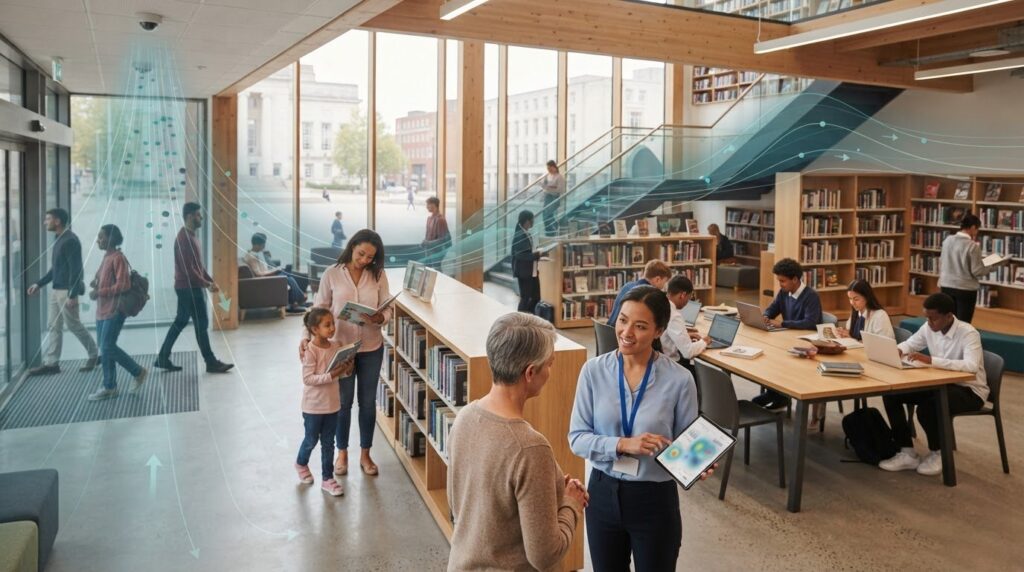
What if a library’s daily visitor total tells you how busy it was, but not whether its spaces are meeting people’s needs? Library visitor counting software can create a more consistent record of visits than manual tallies. However, a headline number is useful only when you understand what it measures and what it leaves out.
Clear figures can support planning, staffing and reporting, but data collection also needs to respect visitors’ privacy. A count can help identify patterns in overall footfall, but it won’t automatically explain why people visited, which services they used or how they moved through the building. Those distinctions matter when decisions affect resources and the visitor experience.
This guide explains what visitor counting systems can and can’t measure, what to ask when assessing a solution, and how to interpret consistent data alongside your library’s wider context. It also covers sensor technology, reporting and privacy, so the figures can support informed planning rather than simply add another number to a report.
Key Takeaways
- Clarify whether you need entry counts, occupancy trends or another measure before comparing solutions.
- Library visitor counting software turns sensor readings into reports, but placement and site conditions affect how useful the data is.
- Assess options against your planning questions, reporting needs, privacy priorities and operational requirements.
- Use repeated counts to explore changes in visitor patterns, while considering context that the figures alone can’t explain.
- Define your measurement needs before selecting hardware and analytics. Contact Smart Urban Sensing or email sales@smarturbansensing.co.uk to discuss your requirements.
What library visitor counting software measures, and what it does not
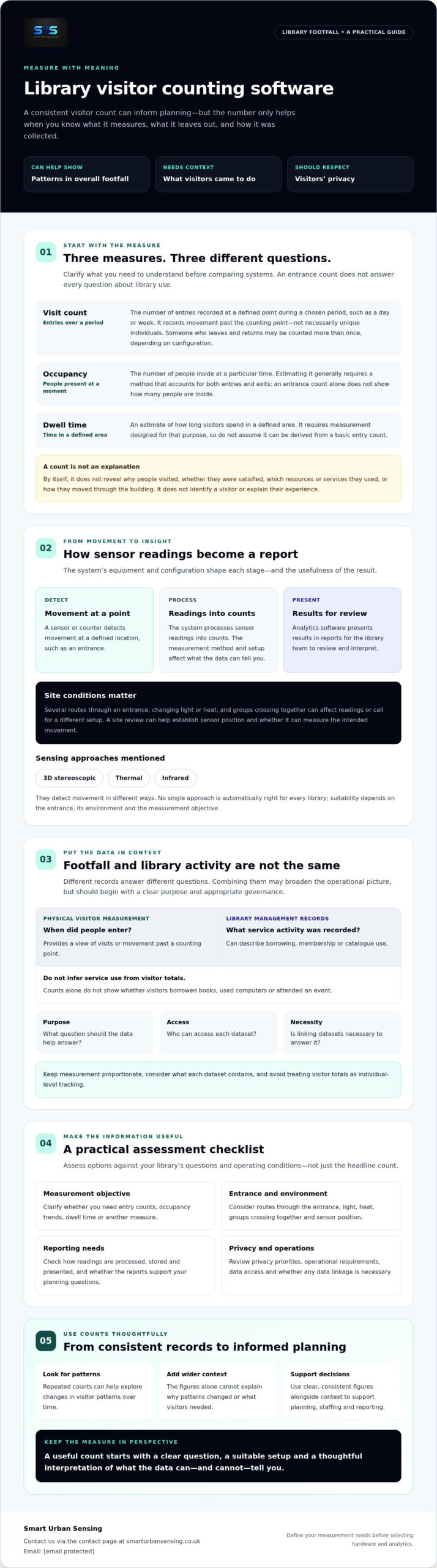
Library visitor counting software records and organises visits to a physical library using readings from sensors or counters. Its core output is the number of people passing a defined point, such as an entrance, during a selected period. This gives library teams a consistent view of visitor volume, but it doesn’t automatically reveal why people came in, whether they were satisfied or which resources they used.
A visit count describes recorded movement past a counting point, not necessarily unique individuals. If someone leaves and returns, the system may register more than one entry, depending on its configuration. A simple Tally counter illustrates the basic principle: the count increases as events occur. Sensor-based systems build on that idea, while the measurement method and setup determine what the resulting data can tell you.
For a practical example of visitor measurement in another public venue, see this guide to museum footfall analytics.
To see an example of entrance counting in a library setting, watch this video:
Visitor counts, occupancy and dwell time are different measures
A visit count is the number of entries recorded during a chosen period, such as a day or week. Occupancy is the number of people present at a particular moment. Estimating occupancy generally requires a method that accounts for both entries and exits. An entrance count alone won’t show how many people are inside at a given time. For a closer look at how live counts are produced and interpreted, see this guide to real time occupancy monitoring.
Dwell time estimates how long visitors spend in a defined area. It requires measurement designed for that purpose, so don’t assume it can be derived from a basic entry count. None of these measures, on its own, identifies a visitor or explains their experience.
How visitor counts complement library management systems
Physical visitor measurement is distinct from records of borrowing, membership or catalogue use. Each answers a different question: footfall can show when people enter, while library management records can describe activity within library services. Counts alone don’t indicate whether visitors borrowed books, used computers or attended an event.
Combining datasets may offer a broader operational picture, but start with a clear purpose and appropriate governance. Consider what each dataset contains, who can access it and whether linking it is necessary to answer the question. A privacy-conscious approach keeps measurement proportionate and avoids treating visitor totals as individual-level tracking. For advice on visitor counting requirements, contact Smart Urban Sensing at sales@smarturbansensing.co.uk.
How library visitor counting software turns sensor readings into reports
A sensor detects movement, the system processes those readings into counts, and analytics software presents the results for review. This is the route from activity at an entrance to a report a library team can use. The details depend on the equipment and configuration, so check how a solution handles each stage, from detection and count processing to data storage and reporting.
Sensor position and site conditions affect the quality and relevance of readings. An entrance with several routes through it, changing light or heat, or groups crossing together may require a different setup from a clear, single doorway. A site review can help establish where a sensor should be positioned and whether it can measure the intended movement. If the equipment does not suit the entrance, even a clear dashboard may present data that is less useful for planning.
Which sensing approaches can support visitor counting?
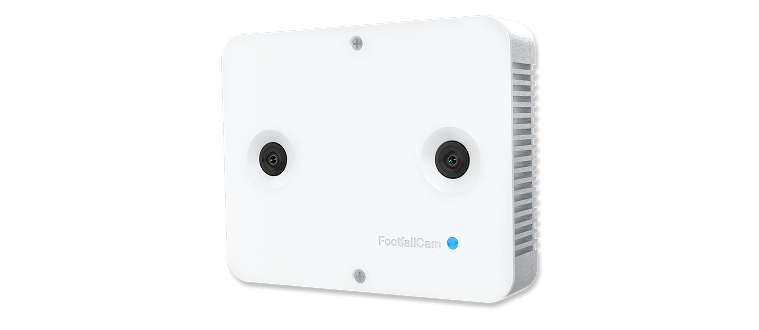
Common categories include 3D stereoscopic, thermal and infrared sensing. They detect movement in different ways, and no single approach is automatically right for every library. Suitability depends on the entrance, its environment and the measurement objective. Smart Urban Sensing provides these sensing technologies, but the appropriate option should be assessed against the conditions at the specific site.
Ask what the proposed sensor detects, where it needs to be installed and how it performs under the conditions expected at your entrance. To explore factors that can affect measurement accuracy, see this guide to high-precision 3D counters. Consider any accuracy figure in relation to the system and conditions described, rather than assuming it applies universally.
From a visit count to an understandable report
Once readings are processed and stored, reporting software can organise counts into views that help teams examine patterns. Where the system supports it, staff might compare daily totals, review counts by time of day or compare selected periods. Consistent intervals and definitions make those comparisons more meaningful, although changes in opening hours, events or access arrangements can still affect the figures.
A dashboard makes data easier to scan, but it doesn’t explain why a pattern changed or decide what action to take. Interpretation remains a human task. For example, a rise in recorded visits during a particular period can prompt further investigation, but the count alone cannot establish its cause. For UK libraries, include data handling, access and retention in the review of any proposed system, and seek appropriate advice where needed.
Smart Urban Sensing’s V9 Analytics Software supports data-driven analysis. If you’re reviewing sensor options or reporting needs, contact Smart Urban Sensing or email sales@smarturbansensing.co.uk to discuss your requirements.
How to assess library visitor counting software for privacy and usefulness
Start with the decision, not the dashboard. Are you trying to understand when visits peak, compare footfall across periods or inform staffing and space planning? A clear question helps define what should be measured and makes it easier to assess whether a system’s reports can answer it. Visitor counts can support planning, but they aren’t a complete explanation of how people use a library.
Assess each option against the same practical criteria: measurement purpose, sensor suitability for the entrance, report clarity, privacy and operational support. Check how the system handles routine needs, such as access to reports and maintaining consistent measurement. The aim is to find a solution that fits the site and produces information staff can interpret, not simply the system with the longest feature list.
Questions to ask about privacy and data handling
Ask suppliers whether their counting approach records visit totals or identifies people, and what information is generated along the way. Request clear details about what is collected, where and how it is stored, who can access it and how long it is retained. Review those answers before procurement instead of relying on a broad description such as “anonymous”.
Anonymous or aggregated counts may reduce the amount of personal information involved, but they don’t provide a full account of visitor behaviour, purpose or experience. Keep collection aligned with the planning question, and consider who needs access to the reports. For wider context, read this guide to GDPR-compliant people counting.
Questions to ask about measurement quality
Ask how the supplier defines accuracy, how it is assessed and whether the evidence reflects conditions similar to your library. An accuracy claim is less useful without that context. Check that the proposed sensor suits the entrance layout, expected traffic patterns and measure you need, whether that is entries or another defined count.
- Purpose: What decision will the data inform, and does the system measure what that requires?
- Site fit: Has the supplier considered the entrance and its expected conditions?
- Reporting: Can staff review the data in a clear, consistent format?
- Privacy and support: Are data handling and operational support explained clearly?
Smart Urban Sensing provides people-counting technology and V9 Analytics Software. Its systems are described as privacy-first and GDPR-compliant. Ask for details relevant to your intended use and site. To discuss visitor-counting requirements, contact Smart Urban Sensing or email sales@smarturbansensing.co.uk.
How libraries can use visitor counting data in planning
Useful planning starts with a question the data can help answer. A library might ask which periods bring the most visits, whether footfall has shifted since opening arrangements changed, or whether patterns differ across comparable weeks. Agree the question first, then choose a consistent measure and reporting period. This keeps library visitor counting software focused on decisions rather than producing charts without a clear purpose.
Repeated measurements can reveal patterns, but a count is evidence to consider, not proof of why visitors behave as they do. A change in visits could coincide with an event, school holidays, altered opening hours or building works. Record relevant events and operational changes alongside the figures, so teams can interpret comparisons in context.
Using visitor patterns to review space and services
Aggregated trends may help teams decide when to review staffing arrangements, opening patterns or the use of shared spaces. For example, a recurring increase in entrance counts at a particular time could prompt a closer look at whether facilities and staff are available when demand appears higher. The count can flag a question for investigation, but it cannot establish which service visitors used or whether a particular space was busy.
Use other relevant operational evidence where available and appropriate, such as service-specific records or staff observations. Keep the measures distinct, and document local changes that may affect comparisons. This helps avoid attributing a shift in overall footfall to a service without supporting evidence.
Making reports useful to library teams
Consistency makes reports easier to compare and explain. Use stable definitions for what counts as a visit, keep reporting periods clear, and label charts so readers can see the dates, units and measure at a glance. A short summary for stakeholders who don’t work with analytics every day can state the key pattern, relevant context and limitations without overstating what the data shows.
Before adding metrics or more complex reporting, return to the original planning question. If the current measure answers it clearly, extra detail may add effort without improving the decision. If it doesn’t, identify what evidence is missing and whether it can be gathered appropriately. Treat the report as decision support: it can show what changed, while further investigation helps explain why.
For support discussing visitor-counting requirements and how sensor-generated data could inform planning, contact Smart Urban Sensing or email sales@smarturbansensing.co.uk.
Choosing a visitor counting approach and planning the next steps
Choose the measurement approach that fits the question and the site. Before comparing library visitor counting software, establish what the library needs to learn, which entrances or areas matter, and how staff will use the reports. The required hardware and analytics depend on that brief and the physical environment, so assess each solution against your actual requirements rather than a generic feature list.
A straightforward process keeps the evaluation focused: define the question, review the site, assess privacy and data handling, compare suitable options, then check whether the proposed reports can support the decision. Agree in advance how you’ll review whether the chosen approach is useful. For example, check whether reports provide a consistent view of the periods or entrance activity relevant to your planning question.
A practical evaluation checklist for library teams
Bring together the information suppliers need to understand the measurement task. Note the entrances, operating patterns and decisions the count should support. Then ask each supplier to explain how its proposed sensors suit the site, what information is collected and retained, how reports are presented, and what operational support is included. Request clear answers you can compare, and check performance claims against evidence relevant to the proposed conditions.
Before reviewing proposals, agree what a useful result would look like. For example, will staff be able to compare visitor totals across consistent reporting periods, or see the patterns needed to inform a space review? This ties the assessment to an outcome instead of adding features that don’t answer the original question.
Discuss your library visitor counting requirements
Smart Urban Sensing provides people-counting technologies, including 3D stereoscopic, thermal and infrared sensing, alongside V9 Analytics Software for data-driven analysis. These are options to discuss in relation to a library’s measurement brief, not a claim of a dedicated library product or a particular library deployment. The appropriate combination of sensing and analytics depends on the site and the information the team needs to review.
Share the entrance context, the decisions you’re trying to inform and the reports you need. This gives the discussion a practical starting point and helps clarify which requirements to evaluate.
Discuss your visitor counting requirements with Smart Urban Sensing, or email sales@smarturbansensing.co.uk.
Turn visitor counts into clearer planning decisions
Better library planning starts with knowing what a visitor count represents. Entry totals can help reveal changes in footfall, but they don’t explain why people visited or which services they used. Define the decisions you want to inform, then assess whether the sensor, reports and privacy approach suit your library and its site.
Useful insight comes from consistent measurement interpreted alongside operational context. Library visitor counting software can help organise counts for review, but its value lies in asking the right questions and using the data as decision support, not as a complete account of visitor behaviour.
Smart Urban Sensing provides AI-powered people-counting and analytics solutions, including 3D stereoscopic, thermal and infrared sensing technologies. Its V9 Analytics Software supports data-driven insights. The appropriate setup depends on your requirements and should not be assumed to include library-specific functionality.
Ready to explore what may suit your site? Discuss your library visitor counting requirements or email sales@smarturbansensing.co.uk. With a clear question and a considered approach, visitor data can become a more useful part of your planning.
Frequently Asked Questions
What is library visitor counting software?
Library visitor counting software records and organises information about visits to a physical library, helping teams review visitor volumes and patterns over time. The measures available depend on the technology and its configuration. A count won’t automatically explain why someone visited, which services they used or how satisfied they were. Before choosing a system, define the questions you need the data to help answer.
How does library visitor counting software work?
A counting system uses sensors to detect visits or movement at a defined location, then processes readings into data for reports or analytics software. Sensor type, installation conditions and reporting options vary between solutions. Ask suppliers to explain how their system defines and measures a visit, what site conditions could affect the readings, and how the data is presented. This helps you judge whether the reports will suit your planning needs.
Can library visitor counting software identify individual visitors?
Visitor counting doesn’t necessarily require identifying individuals. This depends on the technology and configuration. Ask whether the proposed system identifies people, captures images or stores personal information, and request clear details about how information is handled. Don’t assume every product works in the same way. Choose an approach that fits the library’s measurement purpose and privacy expectations, and make sure the supplier’s explanation covers the specific system being considered.
Is library visitor counting software GDPR-compliant?
Compliance can’t be assumed from a product category or a general marketing statement. Ask the supplier to explain how the specific system works, what information it collects and how that information is handled, including access and retention. The library should assess those details against its own requirements and seek appropriate advice where needed. Clear, documented explanations are more useful than broad assurances that don’t describe the proposed setup.
What can libraries learn from visitor counting data?
Counts can help library teams review visitor volumes and identify patterns across selected periods. Depending on the system, reports may support comparisons that inform planning discussions, such as reviewing when visits are higher. Counts alone can’t reveal visitor motivations, service use or satisfaction. Interpret results alongside relevant operational context and other suitable evidence, and be clear in reports about what the figures show and what they can’t establish.
How accurate is library visitor counting software?
Accuracy depends on the system, configuration and operating conditions. Ask how the supplier defines and tests accuracy, and whether its evidence reflects your entrance and expected visitor flow. Smart Urban Sensing reports accuracy of up to 99.9% for its systems, but verify the applicable product, conditions and supporting evidence before relying on that figure. Request information relevant to the specific setup being considered.
Can visitor counting software measure occupancy as well as entries?
Some systems may support measures beyond entry totals, but capabilities vary by sensor, configuration and reporting setup. Entry counts record movement through a defined point, while occupancy concerns how many people are present at a given time. Dwell time is another distinct measure. Define your objective first, then ask which measures the proposed system supports and how it calculates them. To discuss requirements, contact Smart Urban Sensing or email sales@smarturbansensing.co.uk.
Retail and shopping centres
Find out what your entrance data should be telling you
In 20 minutes we review your entrances, current counting setup and conversion questions, then tell you what accurate footfall data would change. No obligation, no hard sell.